YouTube's Skip Button: A Masterclass in Value Exchange
The 5-second countdown is not just UX. It is a real-time auction signal between ad quality and viewer patience.
Context
YouTube sells attention. The product is free, the inventory is video, and the customer who pays is the advertiser. Every design decision on the watch page is downstream of one tension: advertisers want guaranteed exposure, and viewers want to get to the content. Most ad products resolve that tension by force. They make you watch. YouTube made a different bet, and the skip button is where you can see it.
The skippable pre-roll launched in 2010 as TrueView. It changed how a generation of advertisers bought video. Worth understanding why.
What I noticed
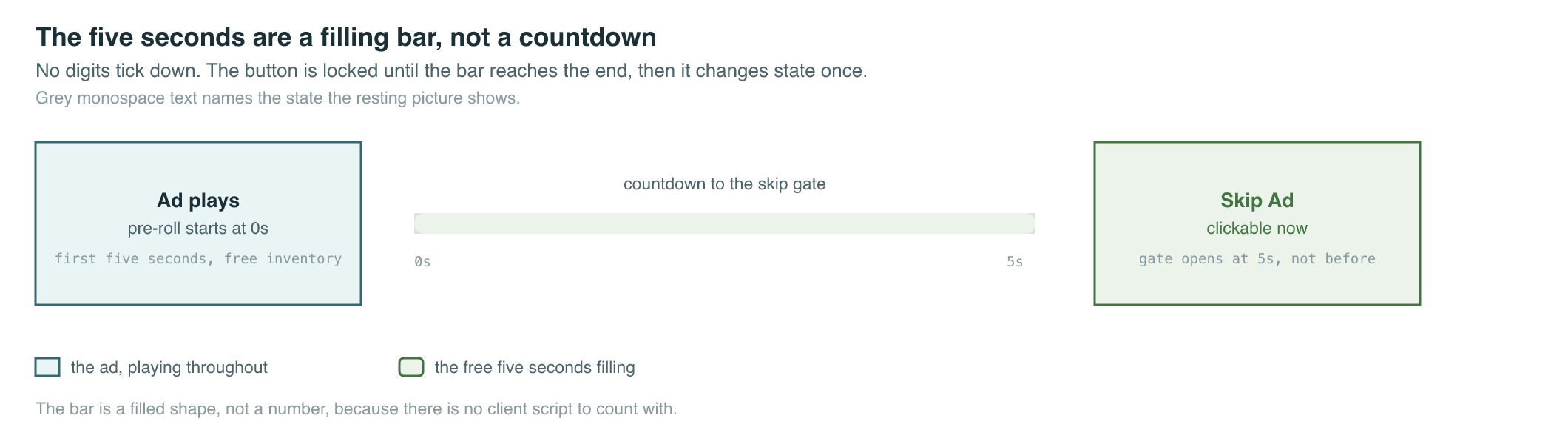
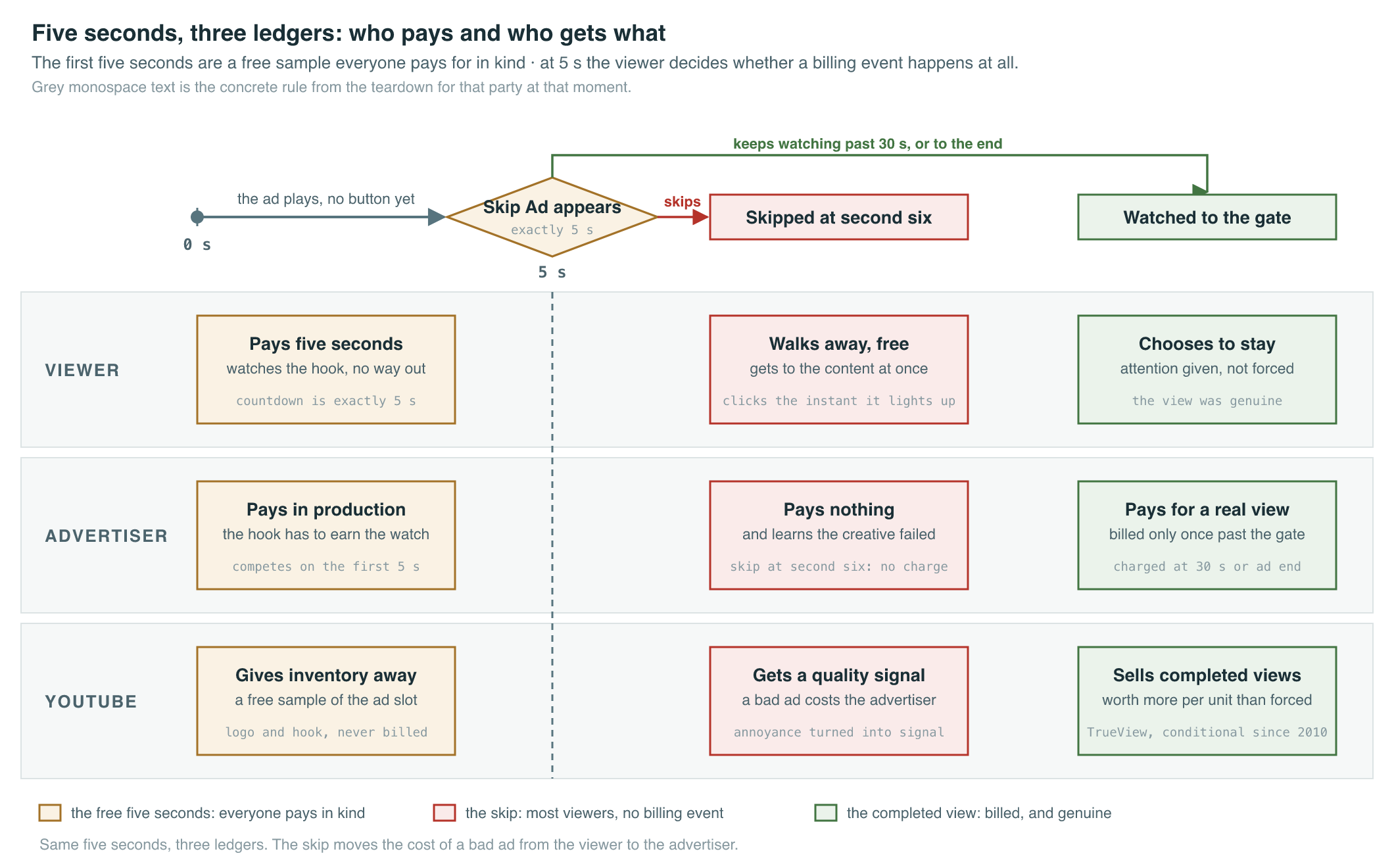
The countdown is exactly five seconds. Not three, not ten. After five seconds a “Skip Ad” button appears, and most viewers click it the instant it lights up. The advertiser is only charged if you watch past 30 seconds or to the end of a shorter ad. So the first five seconds are free inventory, and everything after the skip point is a billing event the viewer chose to allow.
That is the whole mechanism. A free sample, then a price gate the user controls.
The product thinking
The skip button moves the cost of a bad ad from the viewer to the advertiser. In a forced-view model, a boring ad still gets paid. The platform collects, the advertiser wastes money without knowing it, and the viewer absorbs the annoyance. Incentives are misaligned three ways.
TrueView flips this. If your ad is weak, viewers skip at second six and you pay nothing. You also learn, instantly, that your creative failed. If your ad earns the watch, you pay, and the view was genuine. The platform has converted an annoyance into a quality signal. Advertisers now compete on whether the first five seconds are good enough to survive the skip, which is a far healthier thing to optimise than raw impressions.
Picture the room when this was proposed. Sales hated it. Guaranteed impressions are easy to sell and easy to forecast. A product that lets the audience walk away from inventory you already promised looks like leaving money on the table. The counterargument won because it reframed the product. YouTube was not selling impressions. It was selling completed attention, and completed attention is worth more per unit and defensible against every competitor still selling forced views.
What the data probably says
View-through rates on TrueView likely sit in a band that looks low next to forced pre-roll, maybe 15 to 30 percent depending on category, but the views that land are worth more because intent is real. Advertiser retention is probably the quieter win. Once a brand sees that it only pays for watched ads, switching to a forced-view competitor feels like paying for waste. The skip button is likely a retention moat dressed up as a UX feature.
Brand recall on the unskipped five seconds is probably non-trivial too. Even a skipped ad delivered a logo and a hook for free. YouTube gave advertisers a floor of exposure they never billed for, which makes the platform feel generous while the economics stay in YouTube’s favour.
The tradeoffs
Short-term revenue per impression went down. YouTube traded guaranteed billing for conditional billing, and that is a real cost on any given quarter. They bet the higher value of completed views and stronger advertiser loyalty would more than cover it over time.
The second cost lands on small advertisers without the budget to produce a hook that survives five seconds. The skip button quietly rewards production quality, which means it rewards spend. A scrappy advertiser with a slow creative gets skipped into oblivion and pays nothing, but also reaches no one. The mechanism is fair and brutal at the same time.
What I’d change
I would let viewers signal why they skipped. A one-tap “not relevant” versus “seen it” would turn millions of skips into targeting data instead of silent drop-off. Right now a skip is a binary. It could be a sentence.
The PM lesson
Give users a way to say no, and you turn your worst customers into a quality filter for your best ones. The friction you are tempted to remove is sometimes the signal that makes the whole market work.